Card Decision Intelligence™

Price is not proof.

Find opportunities. Test the evidence. Avoid expensive mistakes.

Before you buy. Know Why.

A price tells you what someone asked or paid. FlipForge shows what it actually proves, and what you should pay.

Controlled Private Beta. Invited collectors only. Request Beta Access

Every card ends in one of four decisions, with the reason attached.

  • BUY
  • WATCH
  • VERIFY
  • PASS
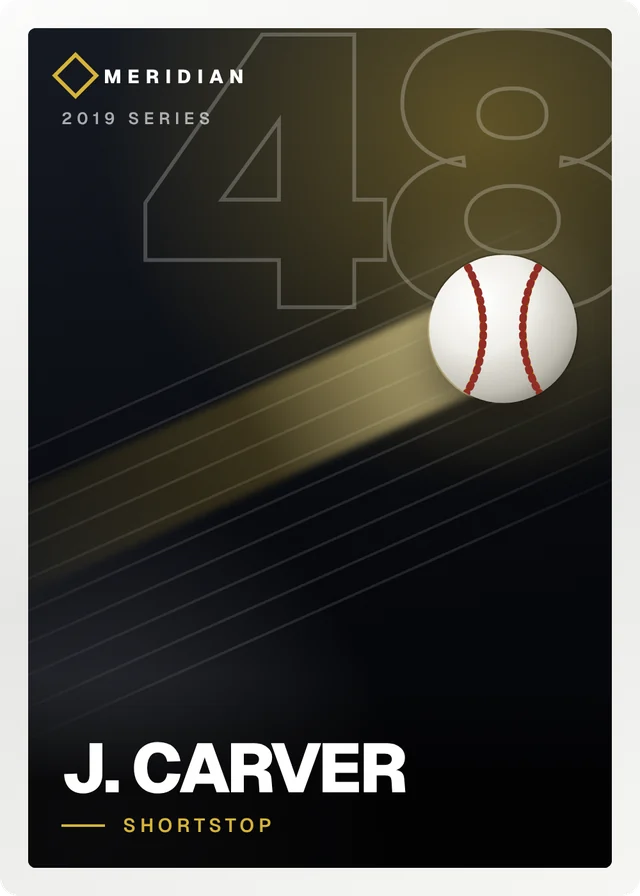
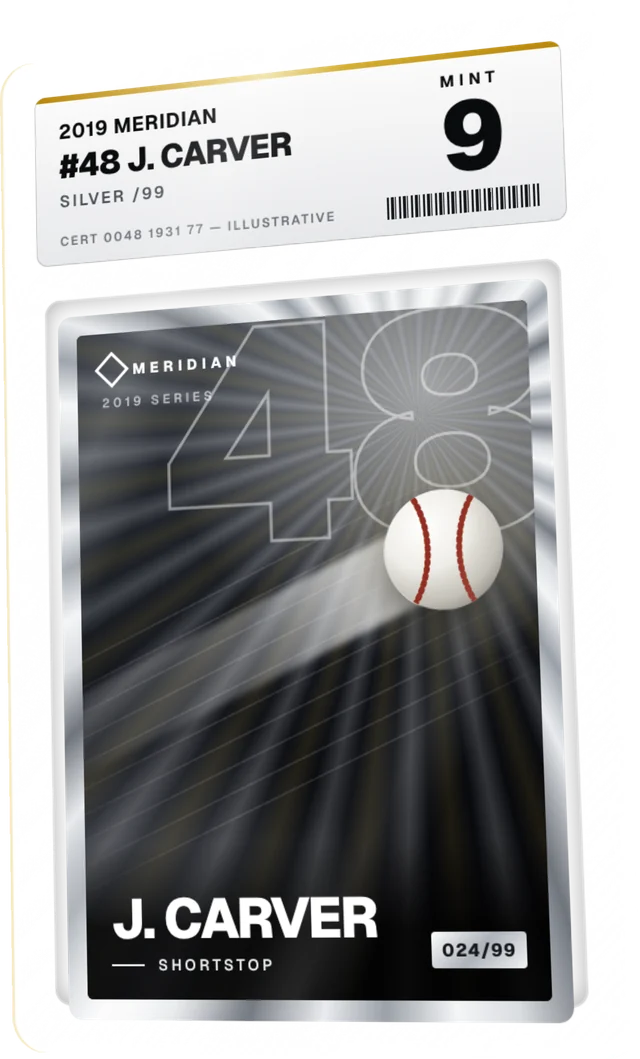
A fictional graded card: 2019 Meridian #48 J. Carver, Silver numbered to 99, Mint 9. Invented for illustration; not a real card, player, set or grading company.
  • 2019 Meridian
  • #48 J. Carver
  • Silver /99
  • Grade 9

FlipForge decision

Illustrative
Asking price
$425
Max Buy
$360
Price gap
+$65
Profit at this price
$0 0.0% ROI
Evidence
3 of 8 prices count
Risk
Thin market, 3 sales
PASS

The asking price is $65 above Max Buy. Your margin isn’t there.

Fictional card and illustrative numbers. Not a live evaluation.

The FlipForge difference

The FlipForge difference: card decision intelligence that goes further. 1, the decision: BUY, WATCH, VERIFY or PASS, with Max Buy, risk and confidence, shown for an invented card, 2019 Meridian #48 J. Carver, Silver /99, Mint 9. 2, the permanent record: exact card, original evidence, timestamp and model version. 3, what actually happened: reported outcomes, actual costs and realized returns, shown as a user-reported sale. 4, the decision report card: how often a call helped, abstained correctly or got it wrong, shown as measuring now with no figures. Illustrative example; no performance figures until outcomes are verified.

The next, harder question.

Genuine sale prices are important evidence. Price tools answer the first question. FlipForge answers the next one.

The price question

“It sold for $500.”

Tells you

Something happened.

The FlipForge question

“What does the evidence support, and what should I pay?”

Tells you
  • Was it the same card?
  • Did the sale actually hold?
  • Are buyers still there?
  • Will you make money at this price?

A price is an observation. Evidence gives it credibility. Decision intelligence decides what to do with it.

Read the full breakdown: Price is not proof →

Not every price counts.

FlipForge found eight prices for this card. Five of them aren’t evidence of what it sells for. The decision rests on the three that are.

3/8Prices that count
~$500Supported resale
PriceWhat it wasTreatment
$512Silver /99, Grade 9, reported saleCounts
$505Silver /99, Grade 9, reported saleCounts
$490Silver /99, Grade 9, reported saleCounts
$460Active listingAsking price, not a sale
$425Active listingAsking price, not a sale
$780Silver /99, Grade 10Different grade
$610Silver /99, Grade 9, 16 months agoToo old for today’s market
$140Base card, Grade 9Wrong parallel

Illustrative prices for a fictional card.

Frozen decisions Every saved decision stays frozen. Saved decisions can be reviewed at Days 7, 14 and 30. Outcomes are recorded only when the original Day-0 baseline and sufficient permitted follow-up evidence are available.

How proof works

One wrong parallel can ruin the entire comp.

These two cards share a year, a set, a player and a number. Only one of them is the card you’re buying. A $140 sale of the base card says nothing about the Silver /99.

Fictional 2019 Meridian #48 J. Carver, Silver parallel numbered 024 of 99
Silver /99The card you’re buyingCounts
Fictional 2019 Meridian #48 J. Carver, unnumbered base card
Base, $140 saleSame name, different cardSet aside

From listing to decision.

  1. 1 Lock the exact card

    Year, set, number, parallel and grade. Checked before any price gets a vote.

  2. 2 Keep the prices that count

    Asking prices, wrong parallels, other grades and stale sales are set aside.

  3. 3 Know your Max Buy

    Supported resale, minus fees, shipping and the margin you want to keep.

  4. 4 Get the decision, and the why

    BUY, WATCH, VERIFY or PASS, with the evidence and risk behind it.

Different goals. Same need for proof.

Everyone approaches cards differently. FlipForge gives them a disciplined way to understand their decisions.

Flippers · Protect the margin

Find the margin before the mistake.

The decision

“Is this actually a profitable opportunity after the costs and uncertainty?”

The problem

An apparent spread disappears fast when comps are wrong, liquidity is weak, or costs are ignored.

The FlipForge framework Decision signals for flippers

  1. 1
    Lock the exact card

    Exact parallel and grade, so the spread is measured against the card you would actually resell.

  2. 2
    Keep the prices that count Key signal

    Only qualified sales count. Asking prices and stale sales are set aside, and a thin market is flagged as liquidity risk.

  3. 3
    Know your Max Buy Key signal

    Max Buy after your selling fees, shipping and target margin, and the cushion between it and the asking price. A break-even price for cards you own.

  4. 4
    Get the decision, and the why

    PASS when the margin is not there. WATCH when the cushion is thin.

How FlipForge helps

A spread only exists after costs, and only while buyers are still there. FlipForge shows both before you commit capital.

Investors · Commit with evidence

Understand what supports the opportunity.

The decision

“Does the available evidence justify committing capital?”

The problem

A chart can show what happened without telling you whether today’s opportunity is defensible.

The FlipForge framework Decision signals for investors

  1. 1
    Lock the exact card

    The exact card is locked, so every later review looks at the same card.

  2. 2
    Keep the prices that count Key signal

    Evidence quality first: which sales qualify, how many there are, and how thin the market is.

  3. 3
    Know your Max Buy

    A supported value built only from qualified sales, and Max Buy at your own costs.

  4. 4
    Get the decision, and the why Key signal

    Risk and uncertainty stay visible. Saved decisions are frozen and can be reviewed at Days 7, 14 and 30.

How FlipForge helps

Committing capital starts with what the evidence supports today and a record of why you acted. FlipForge does not forecast appreciation or returns.

Collectors · Own the right card

Love the card. Understand the purchase.

The decision

“Is this the right card, and does the asking price make sense?”

The problem

You want the card, but you do not want enthusiasm to hide weak evidence.

The FlipForge framework Decision signals for collectors

  1. 1
    Lock the exact card Key signal

    Year, set, number, parallel and grade are checked, so a similar-looking parallel is never mistaken for yours.

  2. 2
    Keep the prices that count Key signal

    You see which prices are reported sales of this exact card, at this grade, and which are asking prices or a different card.

  3. 3
    Know your Max Buy

    A supported value from qualifying sales shows whether the asking price is ahead of the evidence.

  4. 4
    Get the decision, and the why

    WATCH when the price runs ahead of the evidence. VERIFY when the card or its comparisons are unresolved.

How FlipForge helps

You may never sell it. You still deserve to know it is the right card at a price the evidence supports.

Dealers · Buy consistently

Make every inventory decision count.

The decision

“Can this purchase be justified consistently and reviewed later?”

The problem

Inventory decisions compound quickly when a weak comp or identity mismatch slips through.

The FlipForge framework Decision signals for dealers

  1. 1
    Lock the exact card

    Every card is checked against its exact identity, so a mismatched parallel does not enter inventory at the wrong cost.

  2. 2
    Keep the prices that count

    The same evidence rules on every card, with a reason for every price set aside.

  3. 3
    Know your Max Buy Key signal

    Pricing discipline: Max Buy at your own fees and margin, and a break-even price for each card you hold.

  4. 4
    Get the decision, and the why Key signal

    Each saved decision keeps its evidence and reasoning, so it can be traced and reviewed later.

How FlipForge helps

When you buy many cards, consistency matters. The same rules on every card make each purchase explainable. You decide and you buy; dealer-specific workflows are not offered yet.

Grading-focused buyers · Look past the label

Look beyond the label.

The decision

“Does the potential grade premium justify the purchase and associated risk?”

The problem

Population and grade spread matter, but they do not answer the whole purchase decision.

The FlipForge framework Decision signals for grading-focused buyers

  1. 1
    Lock the exact card Key signal

    Grader and grade are part of the card’s identity. A different grade is a different card.

  2. 2
    Keep the prices that count Key signal

    Grade-specific evidence: sales that name a different grader or grade, or that are marked raw, are set aside, so a price difference between grades is shown only where each grade has its own sales.

  3. 3
    Know your Max Buy

    Grading costs and possible outcomes are part of the economics, so a premium is tested against what it costs to reach it.

  4. 4
    Get the decision, and the why

    Grading uncertainty stays visible. VERIFY when the grader or grade cannot be confirmed.

How FlipForge helps

A grade premium is real only when sales at that exact grade support it. FlipForge does not predict the grade a raw card will receive or guarantee a grading profit.

Different strategies. Different priorities. One standard for making an informed decision.

Before you buy. Know Why.

Illustrative descriptions of how one FlipForge framework applies to different goals. FlipForge is decision support: it does not guarantee profit, investment returns or a grade, and it never buys or sells on your behalf.

Would you buy this card?

A fictional listing with an attractive price and an even better-looking comp. Make your call, then see what the evidence says.

The fictional graded card from the top of this page: 2019 Meridian #48 J. Carver, Silver numbered to 99, Grade 9.

Fictional listing

2019 Meridian #48 J. CarverSilver /99 · Grade 9

Asking price
$425
Listed comp
Sold for $780

On the surface: $355 under the comp.

Your call

Would you buy it?

The investigation

  1. 1
    The $780 comp was a Grade 10.

    This card is a Grade 9. A different grade is a different card, so that sale is set aside.

    Different grade
  2. 2
    Two of the prices were never sales.

    $460 and $425 are active listings: asking prices, not evidence. Another sale is 16 months old, and a $140 sale is the base card, not the Silver /99.

    Not evidence
  3. 3
    Only 3 of 8 prices count.

    Three reported sales of this exact card support a resale of about $500. With three sales, the market is thin.

    Thin evidence
  4. 4
    Costs change the math.

    $500 resale − $60 fees − $15 shipping − your $65 margin leaves a Max Buy of $360.

    Max Buy $360

The FlipForge decision

PASS

The asking price is $65 above Max Buy, on thin evidence. Your margin isn’t there.

Looked like
$355 under
Actually
$65 over Max Buy
Prices that count
3 of 8

The listing looked $355 under its comp. Once the evidence was checked, it was $65 over what keeps your margin.

Fictional card and illustrative numbers. NO REAL SALE DATA. Not a live evaluation.

Move the price. Watch the decision.

What would change this decision? Same card, same evidence. Only the asking price changes. Drag the handle or use your arrow keys.

$425

The gold line marks the illustrative Max Buy of $360.

Max Buy$360Highest price that keeps your margin
Price gap+$65Above Max Buy
Profit at this price$00.0% return on the asking price
DecisionPASSThe asking price is $65 above Max Buy. Your margin isn’t there.
How Max Buy is calculated
  1. Supported resale$500
  2. Selling fees, 12%−$60
  3. Shipping and supplies−$15
  4. Your target margin−$65
  5. Max Buy$360

Profit at a given price is $500 − $60 − $15 − the asking price. Return divides that profit by the asking price. Taxes and other costs lower the result. When the card’s identity or its evidence is unresolved, FlipForge returns VERIFY at any price.

Fictional card and assumed costs. NO REAL SALE DATA. Not a live evaluation. NO GUARANTEED RETURN.

Inside the app. The reasoning, on screen.

One card, three screens. When the evidence isn’t enough, FlipForge says so instead of guessing a value.

Real FlipForge app · fictional card and illustrative data

01 · Discover

Search for the exact card.

Discover lines up listings against the card you asked for: number, parallel and serial. An asking price stays an asking price.

  • Exact match first. The listing names the same card, parallel and print run.
  • No qualified sales yet. FlipForge won’t guess a value from asking prices.
  • Next action: evaluate before you buy.
FlipForge Discover result for a fictional 2019 Meridian Series #48 J. Carver Silver /99 listing: all-in ask $425, no qualified sales yet, confidence 15 out of 100, risk 90 out of 100, and an Evaluate with Smart Opportunity button.
Discover · fictional listing

02 · Evaluate

Get a decision, not a guess.

The decision engine checks the card, the sales, the price and the uncertainty. Here no sale of this exact card passed the checks, so the answer is VERIFY.

  • Exact card: identity needs review.
  • Price check: $425 ask, supported value withheld.
  • Uncertainty: 15/100 confidence, 90/100 risk.
FlipForge decision screen: Verify before acting. There is not enough matching evidence yet to make this purchase confidently. Four checks: exact card, matched sales, price check with supported value unavailable, and uncertainty at 15 out of 100 confidence and 90 out of 100 risk. Three checks are marked as needing review; uncertainty is shown for context.
Evaluate · decision from the real engine

03 · Decision Receipt

Keep the reason trail.

Every evaluation is saved as a Decision Receipt: identity, evidence, economics, risk, decision and traceback, exactly as they were returned.

  • 0 sales counted at decision time, so no value is shown.
  • The decision and the model version that produced it stay together.
  • Later events don’t rewrite it. You can always see why.
FlipForge Decision Receipt for the fictional card: decision VERIFY; identity review required; 0 sales at decision; $425 ask with supported value withheld; 90 out of 100 risk and 15 out of 100 confidence; traceback to the Smart Opportunity engine version.
Decision Receipt · scroll to read

Screens from the FlipForge private beta app. The card, listing, seller and sales history are invented for this page; the Discover listing is illustrative, and the decision and Decision Receipt were produced by FlipForge’s decision engine with no market data providers connected. No real sales, sellers or customer records are shown. FlipForge is decision support and does not guarantee profit.

Stop chasing prices. Start making decisions.

Controlled Private Beta. Bring the card you’re unsure about and see the reasoning before you spend.

FlipForge is decision support. FlipForge does not guarantee profit or authorize transactions.

Not ready to apply?

Get a short monthly note on spotting misleading card prices, plus FlipForge beta updates.

FLIPFORGE™CARD DECISION INTELLIGENCE